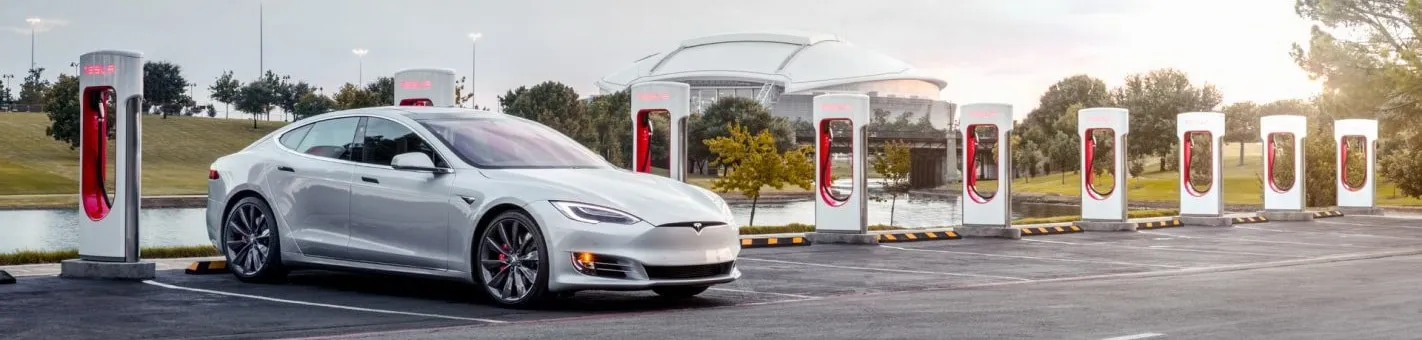
Will electric cars really become established? Are they really the future? If you want to join in competently on these questions, this is THE video for you. I present all the important arguments. And at the end, I will tell you what my assessment is.
This is about combustion-engine vehicles, meaning diesel and petrol passenger cars, and battery-electric passenger cars. We will deal with hydrogen fuel-cell drives in one of the next articles.
Klicken um YouTube-Video zu laden. Dabei wird Ihre IP an YouTube (USA) übertragen.
Datenschutz
Everything I am presenting here consists of measurable, verifiable facts. You will find the sources in the show notes. In some places, where there are no facts, I am making my personal assumptions about the future. And no, nobody is paying me for this video. I am already interested to know how you would answer the question and what arguments you have. Write them in the comments.
Arguments in favour
Let us look at the balance of arguments. What suggests that electric cars will become established, and what speaks against it? Let us first look at the arguments in favour, which suggest that we will all buy electric cars in 2030.
Comfort and charging
1,000 kilometres of range
An electric car’s range will be close to 1,000 km by 2030, although virtually nobody really needs that. The average driver would then only need to fully charge once every three weeks. In reality, however, electric cars will be charged like phones while people sleep. Only on long journeys will you need a fast charger on the motorway every few hours.
300 kilometres in 10 minutes
By 2030, lithium-ion batteries will charge well over 300 km of range in 10 minutes. The solid-state batteries that are coming will be able to charge more than 500 km in five minutes. Even on long-distance journeys, a coffee break will be more than enough.
Charging everywhere
Tesla already showed as a start-up with little money that the claim that charging infrastructure was a problem because it was too expensive was wrong. By 2030, charging stations will be available everywhere. Electric cars can be charged from billions of sockets: at all parking spaces, at work and at home. At home, a high-voltage socket is sufficient. And in apartment buildings, landlords will have to provide charging facilities. With such long ranges, nobody will need to charge constantly.
Charging saves time
You usually need only five minutes a week for charging. Plug in, unplug. You do not drive somewhere to charge; you almost always charge while you sleep.
Reliability and safety
Maximum reliability
Battery-electric drives are extremely simple. The famous comparison is that an electric drive has only 20 moving parts, while a combustion engine has 1,500 or more. Far less can go wrong because there is far less to go wrong. That is why electric cars are very reliable and rarely need repairs.
High accident safety
Without the large engine at the front, they have a larger crumple zone. The rigid battery in the floor provides the highest level of protection in a side impact.
High fire safety
Many people remember newspaper reports about electric cars catching fire. However, the statistics make it clear that electric cars catch fire at least five times less often than “combustion-engine vehicles”.
Emotion
More driving pleasure
Electric cars offer more driving pleasure because they respond immediately and accelerate more powerfully. The battery mounted in the floor makes the vehicles significantly more stable. And electric cars are pleasantly quiet.
Changing image
I assume that by 2030 it will become uncool to drive a combustion-engine vehicle. This is an objective but powerful argument. When I see young people getting excited about Tesla and electric cars, but not about other cars, I conclude that my assumption will prove correct.
Costs
Battery for 2 million kilometres
The most expensive part of an electric car today is the battery. By 2030, batteries will last for more than 2 million kilometres. Even today, they are approaching 1 million miles, or 1.6 million kilometres. At today’s mileage, that corresponds to more than 100 years. In theory. In reality, such mileages will be needed by autonomous robot taxis. That points towards a concept of the future.
Cheaper battery production
By 2030, batteries will cost a maximum of one third as much per kWh as they do today. Costs have fallen by an average of 15% every year. And they are continuing to fall.
Lower purchase price
The battery is the most expensive component of an electric car. For this reason alone, buying an electric passenger car will already be dramatically cheaper in 2030 than buying a combustion-engine vehicle. In addition, the significantly simpler design of a battery-electric drive will lead to much lower purchase prices.
Cheaper to operate
In terms of total operating costs per kilometre, electric cars were already cheaper at the beginning of the 2020s. A Tesla Model 3 is already dramatically cheaper per kilometre than a Toyota Camry[1]. By 2030, combustion-engine vehicles simply will not be able to compete on price.
Raw materials
Raw materials will last for decades
If you look at it neutrally, the raw materials needed for today’s lithium-ion batteries are not really scarce even now. New batteries will conserve resources even more effectively. Rare earths are not used in batteries anyway, but they are used in electric motors and also in combustion-engine cars, phones, laptops and vacuum cleaners.
Batteries are 95% recyclable
Batteries are more than 95% recyclable. Even after 1 million km, practically all the material is still present in the battery. There is no reason why sufficient recycling capacity should not be created. So this cannot be described as resource plundering.
Few critical raw materials
Lithium-ion batteries will need fewer critical raw materials such as cobalt, and possibly none at all. We will then discuss child labour only when it comes to batteries for phones, PCs, shavers and similar products.
Electricity
Only 20% more electricity demand
Even with 100% electric cars, we will need a maximum of only 20% more electricity. Two combustion-engine vehicles already require as much electricity to produce their fuel as is needed to operate an electric car overall.
New electricity storage systems
The storage of electricity for days, weeks and even months is currently emerging through countless innovations, such as giga-batteries, gravity-energy storage systems and many other new solutions. I will cover this in a separate article.
Political independence
We have to import much of our oil. And not always from reputable suppliers. We can generate the energy for electric cars here at home. This is not a strong purchasing argument, but politically it is one.
Environment
Lower energy demand
A large Tesla needs only one third of the energy of a VW Golf to travel 100 km. Battery-electric drives are by far the most efficient.
Low water consumption
Two beef steaks or eleven avocados consume more water than producing a very large battery.
Minimised CO² emissions
The CO2 impact of battery production using renewable energy, especially at Tesla, will already be minimal well before 2030. Combustion-engine vehicles do not have this potential. The share of renewable energy sources is growing strongly. Even today, in Germany’s rather poor electricity mix, electric cars are more environmentally friendly. Fossil-fuelled passenger cars continue to consume finite oil and emit pollutants. Electric cars’ emissions continue to fall, both in production and in operation. Fossil-fuelled vehicles have reached their limits in this respect.
Arguments against
What arguments suggest that we will not all buy electric cars in 2030? If we are still buying cars at all?
Technology
Innovation in combustion engines
Some say that a major innovation leap is still ahead for combustion engines. What would that be?
Electric drives are at the beginning of their development. Combustion engines have reached their limits. The progress of the last twenty years has shown that the optimisation of combustion engines has largely reached its limits. They are approaching the end of their further development. Electric drives, on the other hand, are still at the beginning of their development.
Hydrogen is the future
In ten years, hydrogen fuel-cell drives will have reached that point. Battery-electric drives are merely a transitional technology, aren’t they? A majority still believes that battery-electric passenger cars are a transitional technology and that hydrogen fuel-cell cars will prevail in ten years. Hydrogen as an energy store in passenger cars makes no technical, economic or ecological sense. And we have already been researching it for decades. See the separate video.
Plug-in hybrids are the best solution
Plug-in hybrids are also combustion-engine vehicles and have a much longer range, we often hear and read as an argument. Plug-in hybrids have two complete drive systems: a combustion engine and an electric drive. In 2030, this will be a technically, economically and ecologically nonsensical alternative. With a range of 1,000 kilometres, they will also be unnecessary.
Economy
Why change anything?
We already have everything needed to produce combustion-engine passenger cars that work wonderfully: facilities, know-how, experts and so on. So why change anything? Nokia thought the same about the iPhone. How do you explain that to customers? Customers are just beginning to see the advantages in performance, driving pleasure, ecology and costs.
The Chinese will focus on simple electric drives and offer incredibly good, affordable electric cars.
Protect the automotive industry!
A frequent appeal is: We have to protect our automotive industry! Yes, we do. Less to protect than to save. But customers will be too little interested in that, and if we then excel at making something nobody buys anymore—combustion-engine cars—we will have an even bigger problem.
Arguments in favour are not believed
Anyone who believes that the arguments about electric cars’ lower environmental impact are untrue will dislike electric cars. In the long term, however, it will become increasingly difficult to claim, contrary to the facts, that a diesel- or petrol-powered car is more environmentally friendly, conserves resources or does not cause political and social conflicts over oil.
Anyone who believes, contrary to the technical facts, that batteries are toxic hazardous waste and simply ignores recycling will not like electric cars. I could continue like this. Whenever someone refuses to believe the facts about sufficient raw materials without child labour, long ranges and short charging times, and so on, they will not like electric drives.
These are then not fact-based arguments, but emotionally driven opinions. They are not true, but they lead people to reject electric cars for as long as they can.
Ultimately, it will be like smartphones. What factual and unfounded arguments were there not against smartphones—for example, my Nokia’s seven-day battery life on one charge. And? What happened? Almost everyone has one.
Result: Yes, electric cars will become established
So, viewed as a whole, it looks quite clear. And this is how I arrive at my assumption about the future: in 2030, almost nobody will buy anything other than an electric car. We can make a bet 😊.
What do you think? Of course, you may have a completely different opinion. But please do not base it only on feelings; support it with objective and logical arguments. Share this article and the accompanying video widely with friends and acquaintances so that they can join in the discussion too.
I wish you a bright future!
Have a bright future!
Sources
Sources on the most important disputed topics:
- Scientific overall assessment: https://www.isi.fraunhofer.de/content/dam/isi/dokumente/cct/2020/Faktencheck-Batterien-fuer-E-Autos.pdf
- On the customer experience: https://derletztefuehrerscheinneuling.com/2019/10/10/was-mussten-andere-hersteller-anbieten-damit-ich-meinen-tesla-aufgebe/
- On willingness to buy: https://ecomento.de/2019/09/06/bitkom-umfrage-47-prozent-koennen-sich-elektroauto-kauf-vorstellen/
- On range: https://www.auto-motor-und-sport.de/tech-zukunft/alternative-antriebe/batterie-200-kwh-tesla-model-s-mit-1000-km-reichweite/
- On climate and the environment: https://www.volker-quaschning.de/artikel/Fakten-Auto/index.php
- CO2: https://edison.media/erklaeren/elektroauto-akkus-so-entstand-der-mythos-von-17-tonnen-co2/23828936.html and https://www.tagesspiegel.de/wissen/schwedische-forscher-korrigieren-sich-elektroautos-sind-viel-umweltfreundlicher-als-angenommen/25298932.html
- On water: https://edison.media/erklaeren/lithium-aus-lateinamerika-umweltfreundlicher-als-gedacht/24022826.html and https://www.tagesspiegel.de/wirtschaft/nachhaltigkeit-von-tesla-akkus-wenn-elf-avocados-umweltschaedlicher-als-eine-e-auto-batterie-sind/25291904.html
- Lithium: https://ecomento.de/2017/11/21/auch-bei-elektroauto-boom-lithium-wird-nicht-knapp/
- Cobalt: https://edison.handelsblatt.com/erklaeren/kinderarbeit-in-minen-weniger-e-autos-sind-auch-keine-loesung/22671726.html and http://geohorizon.de/2017/06/02/tesla-einziger-e-auto-hersteller-der-kein-kobalt-aus-kinderarbeit-nutzt/
- Recycling: https://www.adac.de/rund-ums-fahrzeug/elektromobilitaet/info/elektroauto-akku-recycling/
- Battery life: https://edison.media/der-kilometer-millionaer/25197501/ and http://www.unterwegs-auf-der-autobahn.de/der-marathon-kilometer-mann
- On weight: https://www.heise.de/hintergrund/Ist-Leichtbau-ueberschaetzt-4356412.html
- Caravans: https://tff-forum.de/t/bericht-model-3-mit-wohnwagen-1182-km-ueber-die-alpen/73092
- Electricity and resource demand: https://www.bmu.de/fileadmin/Daten_BMU/Download_PDF/Verkehr/emob_strom_ressourcen_bf.pdf
- On electricity demand: https://edison.media/e-hub/so-viel-strom-brauchen-autos-mit-verbrennungsmotor/20826274.html and https://www.wiwo.de/technologie/mobilitaet/elektromobilitaet-reicht-der-strom/20231296-2.html
- On electricity grids: https://efahrer.chip.de/news/Harald-Lesch-irrt-sich-Warum-die-Brennstoffzelle-nicht-die-Zukunft-ist_10815
- Crash safety: On crash safety etc.: https://www.adac.de/rund-ums-fahrzeug/elektromobilitaet/info/sicherheit-elektroauto/
- On fire risk: https://www.wiwo.de/unternehmen/auto/brandgefahr-brennen-e-autos-wirklich-oefter-als-diesel-und-benziner/24457024.html and https://de.wikipedia.org/wiki/Fahrzeugbrand
- On hydrogen fuel cells: https://de.motor1.com/news/403772/vw-elektroauto-brennstoffzelle-wasserstoff/ and https://www.volkswagenag.com/de/news/stories/2019/08/hydrogen-or-battery–that-is-the-question.html and https://www.auto-motor-und-sport.de/tech-zukunft/alternative-antriebe/wasserstoffauto-brennstoffzelle-co2-neutral-batterie-lithium/
- Subsidies in China (read the text, not just the headline): https://www.auto-motor-und-sport.de/verkehr/elektroauto-markt-china-einbruch/
- Costs: https://www.adac.de/rund-ums-fahrzeug/auto-kaufen-verkaufen/autokosten/elektroauto-kostenvergleich/
- Overall assessment: https://www.wiwo.de/unternehmen/auto/elektromobilitaet-die-groessten-mythen-ueber-e-autos/20142790.html
- And the ultimate compilation and clarification of all the myths: http://www.mythbuster.ch/Mythbuster-Elektroauto-Rotta.pdf If I have forgotten another disputed topic, please let me know.
Additional sources
- https://www.nextbigfuture.com/2020/06/tesla-2025-and-2030.html
- https://derletztefuehrerscheinneuling.com/mythen/
- https://www.youtube.com/watch?v=D0Kg7n3ujn8&feature=youtu.be
- https://www.mosbach.dhbw.de/fileadmin/user_upload/dhbw/redaktion/presse/news_2019/DHBW_MOS_Mythen_Elektromobilitaet_Vortrag_Okt_2019.pdf
- https://www.youtube.com/watch?v=D0Kg7n3ujn8
- https://hans-josef-fell.de/die-entlarvung-der-zwei-grossen-mythen-der-e-mobilitaet
- https://edison.handelsblatt.com/erklaeren/lithium-aus-lateinamerika-umweltfreundlicher-als-gedacht/24022826.html
- https://edison.media/erklaeren/kinderarbeit-in-minen-weniger-e-autos-sind-auch-keine-loesung/22671726.html
- https://cleantechnica.com/2019/06/23/our-new-tesla-myths-page/
- https://ecomento.de/2019/05/30/vw-12-mythen-der-e-mobilitaet/
- https://www.wiwo.de/unternehmen/auto/falsche-zahlen-steile-thesen-die-mythen-der-e-auto-kritiker/23906014.html
- https://edison.handelsblatt.com/erklaeren/elektroauto-akkus-so-entstand-der-mythos-von-17-tonnen-co2/23828936.html
- https://www.next-mobility.news/auch-verbrenner-fahren-mit-strom-a-678284/?p=4
- https://ecomento.de/2019/08/14/faktencheck-elektroauto-professor-untersucht-klimabilanz/
- https://www.watson.ch/wissen/international/755959692-diesel-oekologischer-als-elektroauto-der-schmutzige-kampf-ums-sauberste-auto
- https://ecomento.de/2019/07/22/forscher-co2-beitrag-e-fahrzeug-bruchteil-von-dem-eines-verbrenners/
- https://www.adac.de/rund-ums-fahrzeug/e-mobilitaet/info/elektroauto-pro-und-contra/?mc=ext.mail.rmw.elektromobilitaet-pro-contra
- http://geohorizon.de/2017/06/02/tesla-einziger-e-auto-hersteller-der-kein-kobalt-aus-kinderarbeit-nutzt/
- https://teslamag.de/news/akkus-tesla-60-prozent-billiger-als-andere-elektroautos-26926
- https://www.tagesspiegel.de/wirtschaft/nachhaltigkeit-von-tesla-akkus-wenn-elf-avocados-umweltschaedlicher-als-eine-e-auto-batterie-sind/25291904.html
- https://www.youtube.com/watch?v=bp99BpT514U
- https://www.youtube.com/watch?v=afp_3rF5pf0&t=1s
- https://ecomento.de/2018/11/21/so-aufwaendig-ist-das-recycling-von-elektroauto-batterien/
- https://www.youtube.com/watch?v=r_NCRuMHC3Q&feature=youtu.be
- https://ecomento.de/2017/11/21/auch-bei-elektroauto-boom-lithium-wird-nicht-knapp/
- http://emobilitaetblog.de/festkoerper-akkus-koennten-den-markt-der-elektrofahrzeuge-aufwirbeln/
- https://ecomento.de/2019/01/17/elektroauto-batterie-recycling-herausforderungen-loesungen-positionspapier/